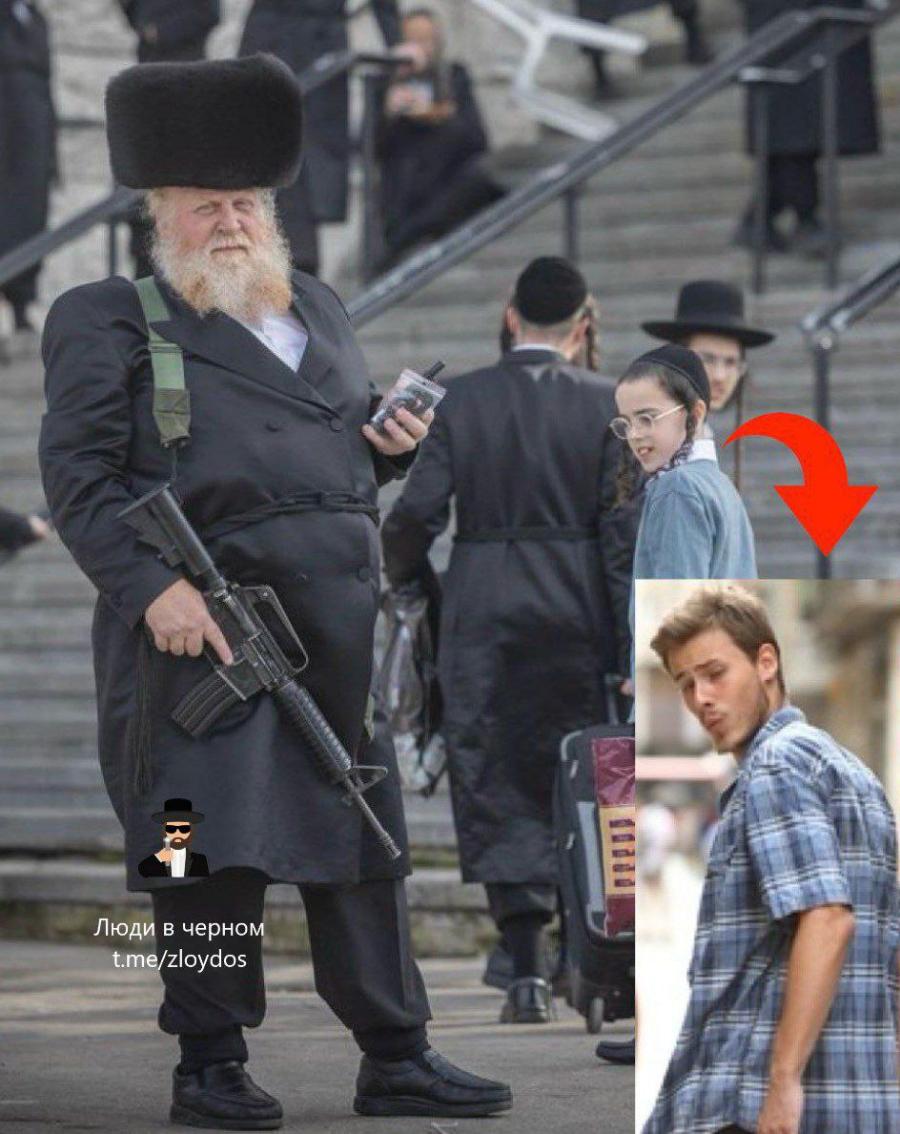

Война против ХАМАС изменила в Израиле многое. Какие-то изменения заметны, какие-то происходят скрыто от глаз.
С началом войны на стройках в Израиле стало меньше палестинских рабочих, которым закрыт въезд в страну. Нелегалов в расчет не берем. Пока правительство думает, как решить проблему при помощи иностранных рабочих и частичного возвращения палестинцев, строительный рынок нашел крайне нестандартное решение. На стройках появились харедим.
👍6
2
comments

![his discoveries was that the "economic absorptive capacity"] criterion for immigration ignored fundamental political and The editor still recalls the breathless incredulity, with which he, as a boy, first saw the proposed map (Map 7, p. 337).* Ever since 1917 the Arabs had been saying that the "Jewish national home" was merely a euphemism for a Jewish state, only to be referred by London to the "safeguard" clause in Article 2 of the Mandate about "self-governing institutions". The Arabs, of course, were horrified at the very principle of partition, which they saw as the vivisection of their country. But they were equally horrified at its interpretation which gave the Jews 40% of Palestine at a time when their land ownership did not exceed 5.6%. The envisaged Jewish state included hundreds of Arab villages and the solid Arab bloc of Galilee north of Nazareth (Maps: 1, p. 94; 13, p. 672; and 14, p. 673). But the cruellest provision of all was that there should be, if necessary, "a forcible transfer of Arabs" from Arab lands allotted to the Jewish state. This was, indeed, a nightmare come true. The partition proposals served only to fan the flames of Arab rebellion. In Chapter 33 Barbour traces the "Dark Path of Repression" followed by the British. Chapters 34-36 and Chapter 39 afford us glimpses of some of the techniques used: the blowing-up of residential quarters in Jaffa in 1936, in the name of "town planning", fearlessly condemned by McDonell and Manning, the British judges of the Palestine High Court (Chapter 34); the eye-witness account by Kirkbride, District Commissioner, of three Arabs hanged in Acre Prison early one morning in the spring of 1937, (Chapter 35); the "environmental punishment" visited on the Arabs of Mount Carmel in 1936-38 described by Newton (Chapter 36); and the terrorisation and murder of Arab villagers by special British-trained Jewish squads (in which Moshe Dayan was recruited) in 1938, in the account by Mosley (Chapter 39). In Appendix IV (p. 846 ff), the editor conservatively estimates Arab casualties during 1936-39 at about 5,000 killed and 15,000 wounded, out of a population of one million Arabs. Translated into British and American figures (populations 40 million and 200 million respectively)](https://media-moera-blog.s3.amazonaws.com/IOEykrXn9qc1wDgmjKJb3fjGo0o_1710651970.jpg?response-cache-control=private%2C%20max-age%3D259200&X-Amz-Algorithm=AWS4-HMAC-SHA256&X-Amz-Date=20260929T094119Z&X-Amz-SignedHeaders=host&X-Amz-Credential=AKIAW3MEBNDN4PRSIX5F%2F20260929%2Fus-east-1%2Fs3%2Faws4_request&X-Amz-Expires=259200&X-Amz-Signature=3a62d38c884e680bb742088745f019285b729f2522c663226eb715149278e449)